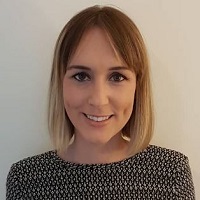
Sarah James
15th July 2022
Women founders in Tech strive to establish their presence and motivate others in the industry. However, even in the modern world, women entrepreneurs are under-represented and do not achieve parity as their male counterparts in the world of technology.
Start-ups form the basis for economic growth; today, approximately 2,900 start-ups are launched in Germany annually. New ideas, products, services, and business models modernize the economic structure and create new jobs.
We live in an era where technology provides the vehicle to create lasting change globally. But the possibilities of technology and innovation will never be truly realized if we’re missing out on the ideas and creativity of half the population.
As part of the tech community, we must raise awareness, challenge gender parity, increase access to both mentoring and financing for women, and inspire women to take the leap and create more start-ups to support Germany’s ecosystem annually.
So we asked seven pioneering, inspiring female entrepreneurs based in Berlin about their experiences.
Ese, originally from London, is the Founder and CEO of Yambu, a peer-to-peer mental wellness app for the black community.
Katie, Domi Labs CEO and Co-Founder is a prop-tech start-up tackling identity and data privacy issues in the housing rental market.
Dr Azadeh Dindarianan, an impact-driven entrepreneur, scientist, strategist, author, and mentor of women in technology, founded the mental health teen app KRATOSapp.
Elise, Co-founder of Sādu, a play-to-earn mobile app for nature-based carbon removal, where she gets to flex her tech muscles and love of data to keep trees alive.
Activist and entrepreneur Noam Gerstein is CEO and Founder of Bina, a decentralized, data-driven primary school ecosystem designed to deliver customized learning at scale.
Marie-Laurence Amiguese is CEO and Founder of Altagram Group – Game Localization and Alcoa.
Entrepreneur-turned-investor Bryony Cooper is Managing Partner at Arkley Brinc VC, investing in early-stage Deep Tech start-ups in Europe.
Byrony, who came from an untraditional background, from being a professional singer to scaling three successful tech companies by the age of 30 and investing in others, says the main common challenge in the early stages she sees with the people she has supported is poor communication between co-founders. She states it’s paramount to communicate your vision to the whole team, from the co-founders to the investor to the interns, and be transparent to ensure everyone is aligned and aware of the short-term to the long-term goals.
When asked about when the right time to start a business, Azadeh replied, “there never is a right time; it all down to the process” she also included that she is a firm believer in having a robust and supportive network behind you helps you to believe in yourself and the choices you are making.
Female-led firms not only report higher stock prices and employee retention rates but also take on age-old issues of workplace gender discrimination through programs that tackle gender inequality for all employees. Yet, female entrepreneurs still find themselves at a disadvantage.
When Marie was asked how she had to combat bias in a male-oriented field and what advice she could offer to others, she told her narrative of how she founded her business after experiencing the poor treatment of being a woman and mother in the industry. However, the experience wasn’t pleasant; this empowered and motivated her to kick-start her own company.
Most female entrepreneurs struggle with ideas, mainly if this is their first start-up venture, Ese who is new to the start-up market, stated that the first step to creating a concept is finding the problem; she offered her advice for female founders to not just settle on the first solution and be realistic with your investment.
When pitching to investors, Katie, who is currently in the process, explained “this can be terrifying,” but through speaking to fellow female founders, hearing their valuable insight and experience and also getting in the right mentality of ‘I got this helped her overcome her worries. Her top tip was ‘keep going until you find that right investor!’.
Bryony agreed, adding her advice of doing the research into the investor’s background and offering advice from an investor’s perspective; “do your homework and ensure it is the right investor for your idea and your mission”.
Elise co-founded Sādu in 2021 and launched her MVP in the same year, offering wise words when launching your MVP. Once your MVP is raised, listen to your users, collate all the feedback and keep frequent communication with early adopters for actionable feedback and improvements to the user journey. Elise comes from a background where she focuses on scalable processes; she alluded to the fact that this doesn’t matter during the MVP process. It focuses on getting the product working efficiently.
It is by no means the case that women are less successful when they start up. The economic benefits may even be higher when women start-up, at least that’s what some figures from the Female Founders Report suggest. All-female teams create an average of 23 jobs per female founder. That puts them ahead of all-male teams, where the figure is just 17 jobs per founder.
Let’s continue the discussion. If you want to hear more from our recent female founders’ event, please click here: https://www.youtube.com/watch?v=GTDH_eawEww&t=345s